
Sustainable Interiors Guide: Durable Materials and Eco-Friendly Design Trends

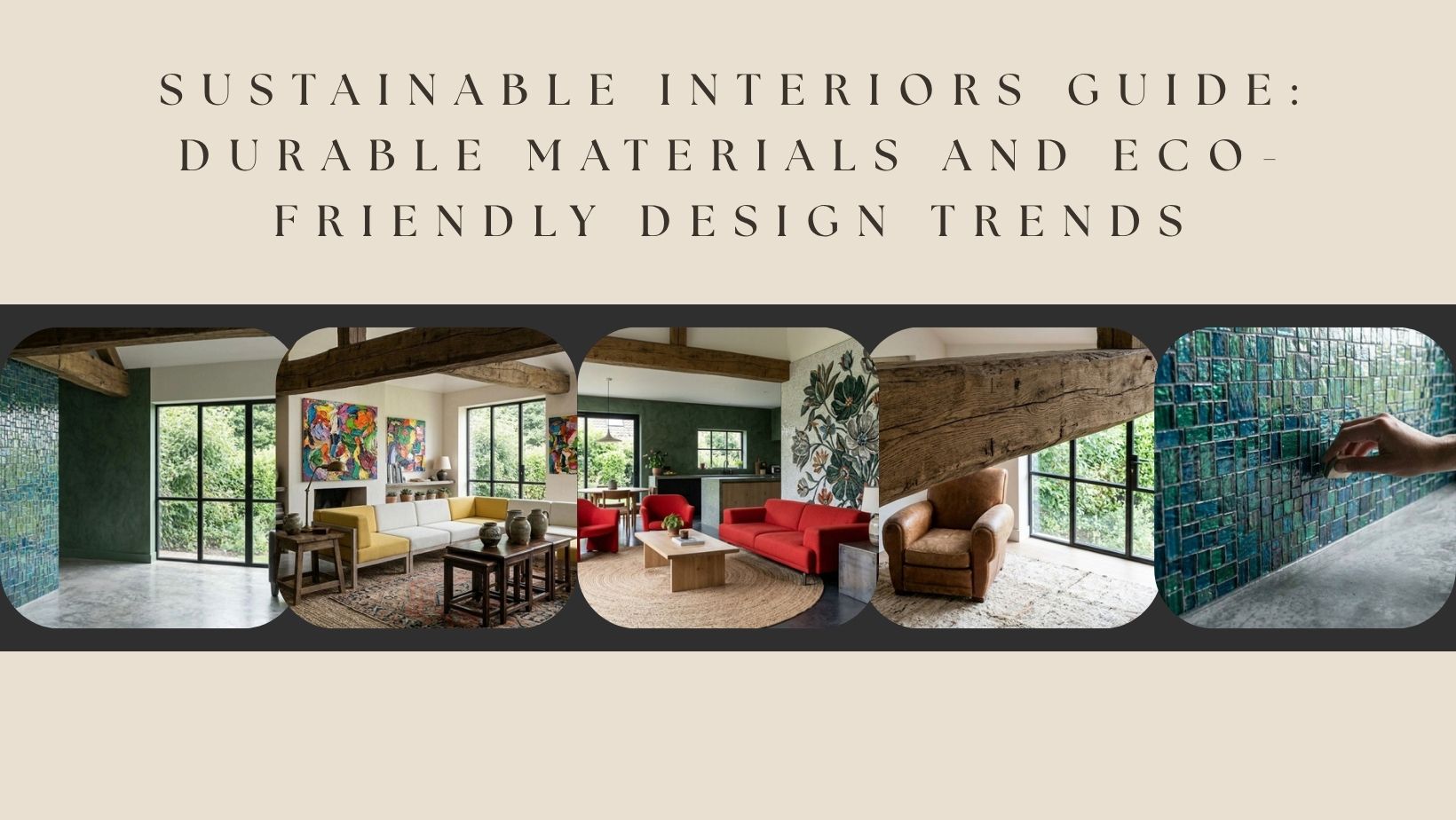
Main Highlight: Sustainable interiors focus on long-term materials and thoughtful design choices, creating spaces that reduce waste while staying relevant over time.
Slow Design Approach: Choosing materials that age well and hold their value helps prevent frequent replacements and reduces environmental impact.
Modern Sustainability: Eco-friendly design has evolved into a more refined and intentional style, moving away from outdated, overly rustic aesthetics.
Natural Materials: Reclaimed wood, lime plaster, recycled composites, and organic textiles bring durability, texture, and a lower environmental footprint.
Longevity Over Trends: Timeless colors and materials reduce the need for constant updates, helping interiors remain consistent and functional for years.
Glass Mosaic Advantage: Glass mosaic tiles offer durability, resistance to moisture and wear, and long-term performance with minimal maintenance.
Lasting Impact: Investing in durable materials like glass mosaic and reclaimed wood supports a more sustainable home that requires fewer updates over time.
(5 minutes) In this digital age of fast fashion and disposable furniture, the most radical act of sustainability you can commit to seems to be just staying put. Sustainable design isn’t just about keeping it green at the checkout. It is also about “slow design”. It is about opting for materials that age gracefully rather than ending up in a local landfill by the next decade.

Being eco-friendly doesn’t mean your home has to look like a woodpecker’s nest. Gone are the days of beige walls, scratchy hemp rugs, and furniture that looks like it’s assembled out of guilt. Sustainability has had a glow-up. We are now officially moving into the age of the circular economy, where every chair, carpet, and tile has a past life and infinite future.

Nature is The Ultimate Design Flex
To build a home that both amazes and lasts, we look to the earth. Reclaimed wood, natural lime plasters, recycled composites, and organic linens are the foundation of the ongoing elevated, environmentally conscious chic. This new wave of sustainability is all about keeping the materials in play. By choosing a piece made from repurposed steel or salvaged timber, you’re not just buying furnishings and staying trendy. You’re improving the indoor air quality of your home and keeping carbon locked away and out of the atmosphere.

Heritage Over Hype
Sustainability inherently pushes back against the idea of micro-trends. Instead of going with the flow of empty consumerism, where you have to constantly update your home decor to match the color of the month, sustainability is about a lasting approach. That concept draws its essence from heritage and the natural world itself. Choosing a classic, nature-inspired palette, such as deep forest greens and stone greys, ensures that your home remains stylish through 2030 and beyond. The goal is to create something that feels relevant across generations, and not something you will get the urge to replace in a year or two.


Design To Deconstruct
One of the defining shifts in eco-architecture right now is designing with deconstruction in mind. Spaces and materials are chosen not just for how they look today, but for how easily they can be repaired, reconfigured, and eventually reused. Think modular furniture, nesting tables, simple screw-together joinery, and reclaimed materials. Think of elements built to adapt rather than expire. It’s a move away from excess and toward intention. Better to have fewer pieces that are better made, and that can evolve with you, than to have more things with less value and with an expiration date in sight. Sustainability cultivates the understanding of the long-term value and designing accordingly.

The eternal Glass Mosaic
When it comes to surfaces, sustainability means durability. This is where glass mosaic shines as a champion of eco-design. Glass is inherently resistant to moisture, mold, and even the strongest chemical cleaning agents, meaning it won’t need to be replaced for generations. Furthermore, glass is one of the few materials that can be recycled without losing its structural integrity. A handcrafted glass mosaic wall isn’t just a design choice, but a permanent solution that eliminates the need for repainting every three years.


As the industry shifts more towards environmentally conscious design, the most successful interiors will be those that prioritize durability over fleeting fast-fashion trends. By choosing a “forever” material like glass mosaic tiles or reclaimed wood, you ensure that your home remains a sustainable sanctuary for decades to come.


LIKE THIS? PLEASE SHARE AND “SUBSCRIBE” TO CATCH THE NEXT ONE.
FOLLOW OUR STORY AS IT UNFOLDS ON INSTAGRAM | FACEBOOK | TWITTER | PINTEREST
WE ADD NEW WORKS EVERY DAY, CHECK OUR LATEST MOSAIC ARTWORK COLLECTION.



18 Comments
I really love this trend toward eco-friendly design. It’s a great feeling to know your home is nice to the planet, and eco-friendly design just looks so darn good, anyway!
I am a huge fan of natural materials they are both sustainable and also look amazing. We are in the process of decorating the living room and I hope to use sustainable materials.
There are some lovely pieces and ideas here I do love using materials and the depth they can bring from glass mosaics to old timber frames
I am all about eco-friendly. It is such a big part of planning and strategizing every time I take on a new project. Thanks for sharing all the trends!
Love this! I think a lot of people think of being sustainable as being a massive lifestyle shift, but it really doesn’t have to be. I liked how you said about staying put can be one of the most sustainable things. Finding pieces that are built to last, not just quality wise, but trend wise too is so important.
I think everything that I have in my house is eco-friendly. It has been such an important part of my life, so I am grateful you are bringing this up to the public.
Mosaic wall art is so innovative. I can not get over how inventive it is. This will be the design staple in every style conscious home
Thank you so much for educating me about the durable materials and eco-friendly interior design trends. Super helpful.
I love eco-friendly designs, furniture and design materials. They are a true drive for me, so whenever I find an article like yours, I get so excited! Thank you for all the inspiration.
More industries need to focus on eco-friendly designs and materials. It’s nice to see it applies to interior design.
Thank you so much for educating me about the sustainable interior design practices. So helpful.
Loved this and about eco-friendly designs can feature in your home as well. In a world where we are all trying to be more eco-friendly and I do love the ideas
I love this type of style. Wood and plants are such a vibe. I have lots of this type of decor at home!
I am in love with all of the designs featured above and as a person that loves nature and the outdoors…. these are my kind of designs! I would love a cool backsplash like that….the colors are so pretty!
I love the idea of being eco-friendly at home. We buy recycled furniture where possible but I love the idea of durable materials.
Although we live in a house that has been extended in a super-modern open plan design we have made sure to reuse wherever possible. And we used eco paints (lots of great brands out there now)
It’s so important to take steps to be eco friendly. I’m happy interior design has made it a priority. Especially when it creates such beautiful works of art.
Anything eco friendly and I am there , loving all of these designs , so beautiful